
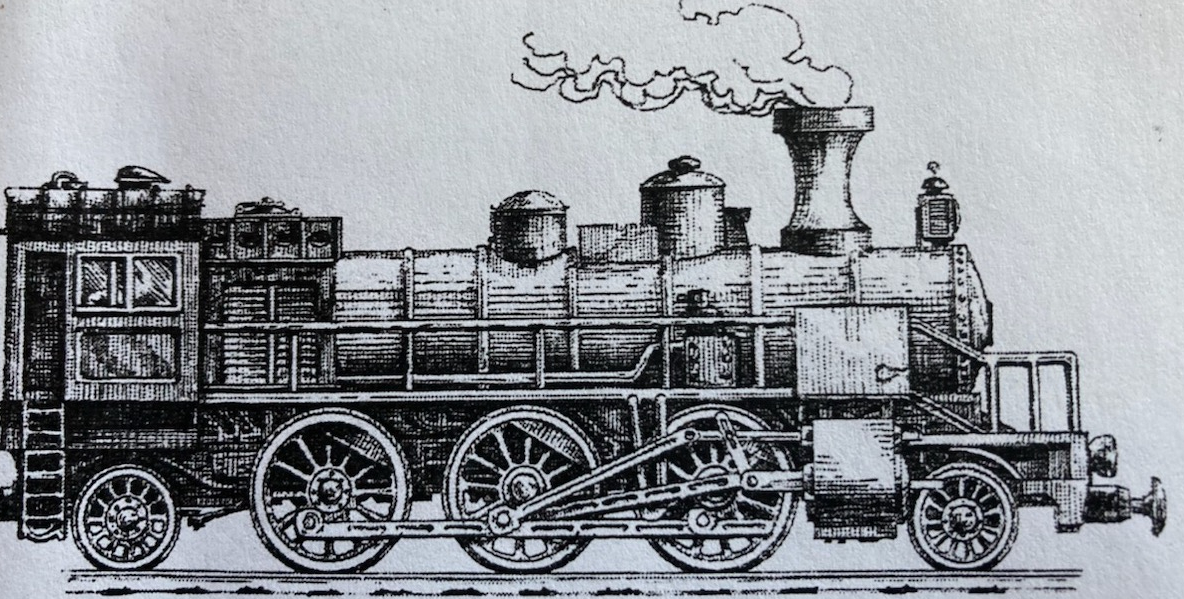
During the westward movement of the 1840’s and 1850’s there was another relocation movement that is not often covered in social studies units. Starting in 1854, small groups of children were being moved from eastern cities to the central plains, and in later years further west. Traveling not in wagon trains, but by railroad. An estimated 200,000 children were sent to the midwest and beyond. Lives were changed. Opportunities were provided. The risks were plenty. As a descendant of an orphan train rider, my goal is to share orphan train facts and stories.

Author Eve Bunting was one of the first to write in picture book format an orphan train story for young readers. In this touching tale, Marianne is one of fifteen orphans, traveling by train to the midwest. Using historical fiction, Ms. Bunting shared what it was like for Marianne to watch each of the other riders find his or her forever home, and how it felt to be unchosen. Beautifully written with authentic illustrations by Ronald Himler, TRAIN TO SOMEWHERE is a wonderful children’s book.

1Charles Loring Brace, “What Shall Be Done with Foundlings?” in The Dangerous and Twenty Years Work among them. (New York: Wynkoop and Hallenbeck, 1872).
SISTER MARY IRENE FITZGIBBON AND THE FOUNDLING HOSPITAL
In October, 1869, Sister Mary Irene Fitzgibbon, of the Sisters of Charity, was put in charge of the New York Foundling Hospital. This shelter organized by the Catholic Church provided a safe place for abandoned babies. The first infant was left the very night the Sisters of Charity opened their doors. In the next two and a half months, 123 babies were cared for by the sisters. In two years time, the Foundling had accepted 2,500 infants.
The need for foster homes was great. In 1874, in order to find Catholic homes for these babies both near and far, the Foundling Hospital organized Mercy Trains. The Catholic Church, with its strong system of parishes across the midwest and other states, asked parish priests to reach out to their parishioners. The Sisters of Charity themselves had a network of contacts throughout the United States including Colorado, New Mexico, Wyoming and Montana.1
CHARLES LORING BRACE AND
THE CHILDREN’S AID SOCIETY
Charles Loring Brace worried about the growing number of homeless children he saw working as match-sellers, rag-pickers, boot-blacks, newsboys, and crossing sweepers. Mr. Brace, the founder of the Children’s Aid Society, gathered children living on the streets and came up with a plan to resettle them with rural families.1 Orphan trains began as a project in 1854. It would change the lives of thousands of homeless children. Mr. Brace could not have predicted that orphan trains would continue for another 74 years.

Sister Mary Irene Fitzgibbon
http://www.nyfoundling.org/150-years-of-the-foundling-honoring-our-beginnings/
1Holt, Marilyn. The Orphan Trains, Placing Out in America. Univ. of Nebraska press.1992 p. 110.
 Deb Johnston